Etymology Post: Biscuit
The word biscuit is just so weird I had to research it. Also, my cousins have a dog named Biscuit. Hi Biscuit! Hi cousins!
The word is made up of two word-forming bits: bis from Latin, meaning “twice,” and coctus meaning “cooked.” The word was originally panis bis coctus, meaning “bread twice-cooked,” and was shortened to biscotum, and then eventually biscotto. Then French got ahold of it and suddenly it was bescuit because French can’t help but throw an errant i or e into everything. Then English was like, “we’re mostly illiterate so we’re gonna call this a bisket cuz that’s what it sounds like you weird Frenchies are saying.” And, as most people know, it’s really definitely only used to refer to harder bread products that we would call cookies here in the states.
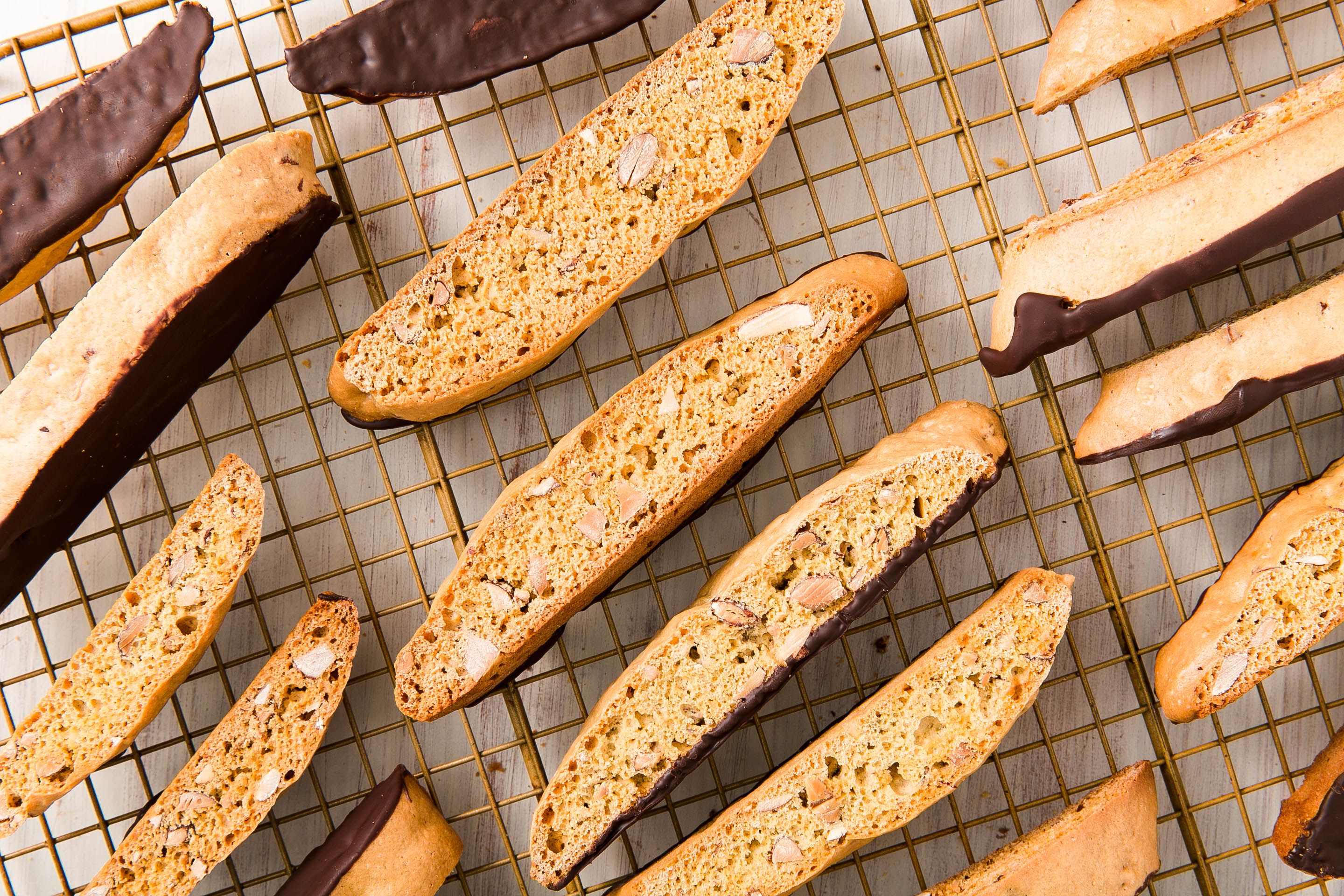
Traditional biscotti is a twice baked sweet bread, and though most cookies are not twice baked, the texture is similar so it’s understandable why the English would start calling them biscuits.
The first use of biscuit being used to for those awesome things you get with gravy in the south, was recorded in 1818 to describe the sort of food that sawmill workers were being served in Appalachia at the time. Those biscuits were probably pretty stodgy because baking powder and soda hadn’t been invented yet, so to give them some leavening they (meaning a kitchen slave) just beat the crap out of the dough until slavery was abolished and then a machine was invented to do it. These were served with gravy because pork fat was abundant and cheap. These biscuits were sort of a more nutritious and filling form of hardtack because they had lard added (fats are filling). The thinking around calling them biscuits is that it came with the Scottish colonists who settled in Appalachia. They called them “soft biscuits” in Scotland, and the name, much like biscuits and gravy, stuck.
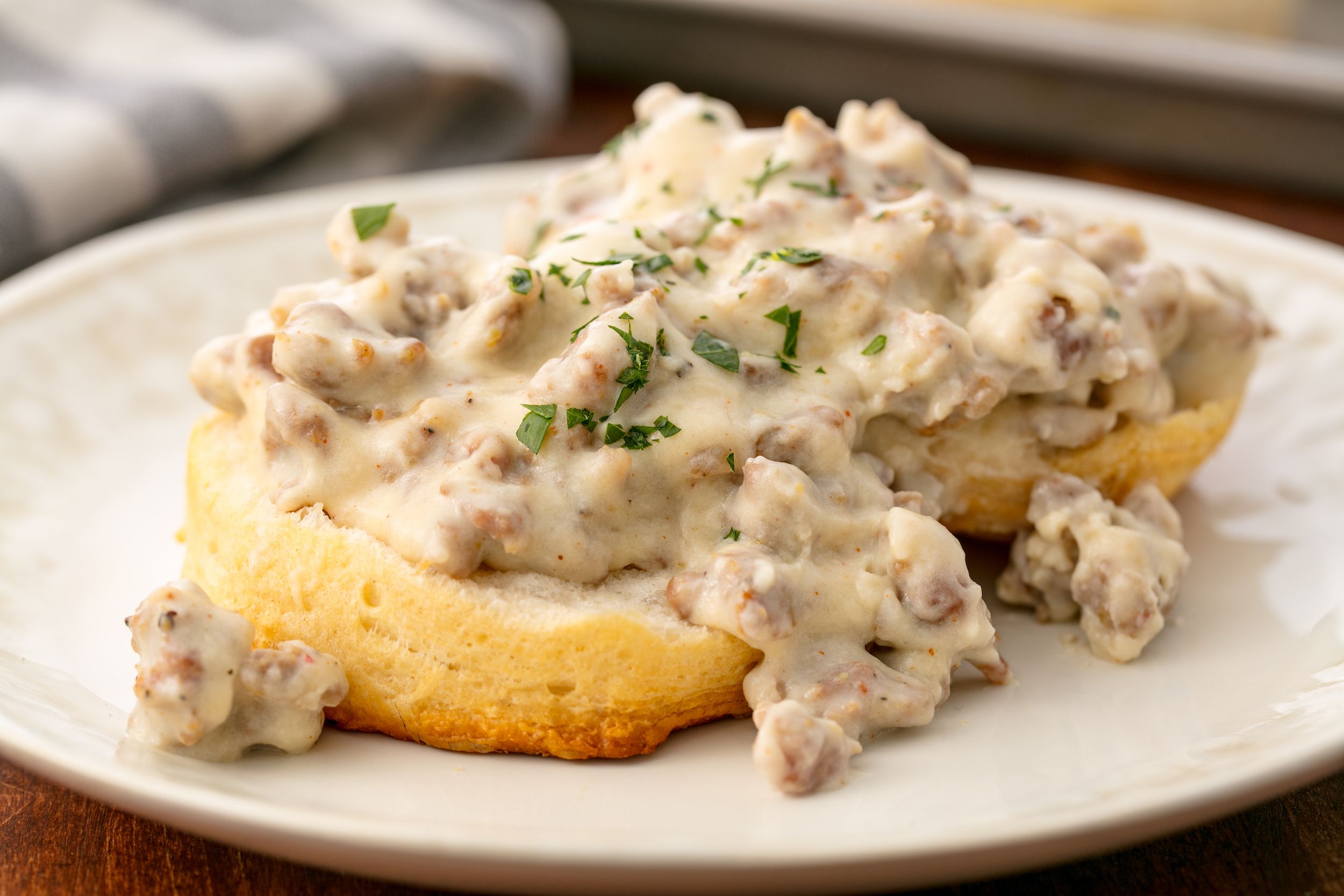
Here’s a WAPO article about the origins of the southern biscuit: https://www.washingtonpost.com/news/voraciously/wp/2019/07/22/today-even-fancy-restaurants-serve-biscuits-and-gravy-but-the-dish-comes-from-modest-beginnings

 Word Nerd